For owners and asset managers, not agents marketing space.
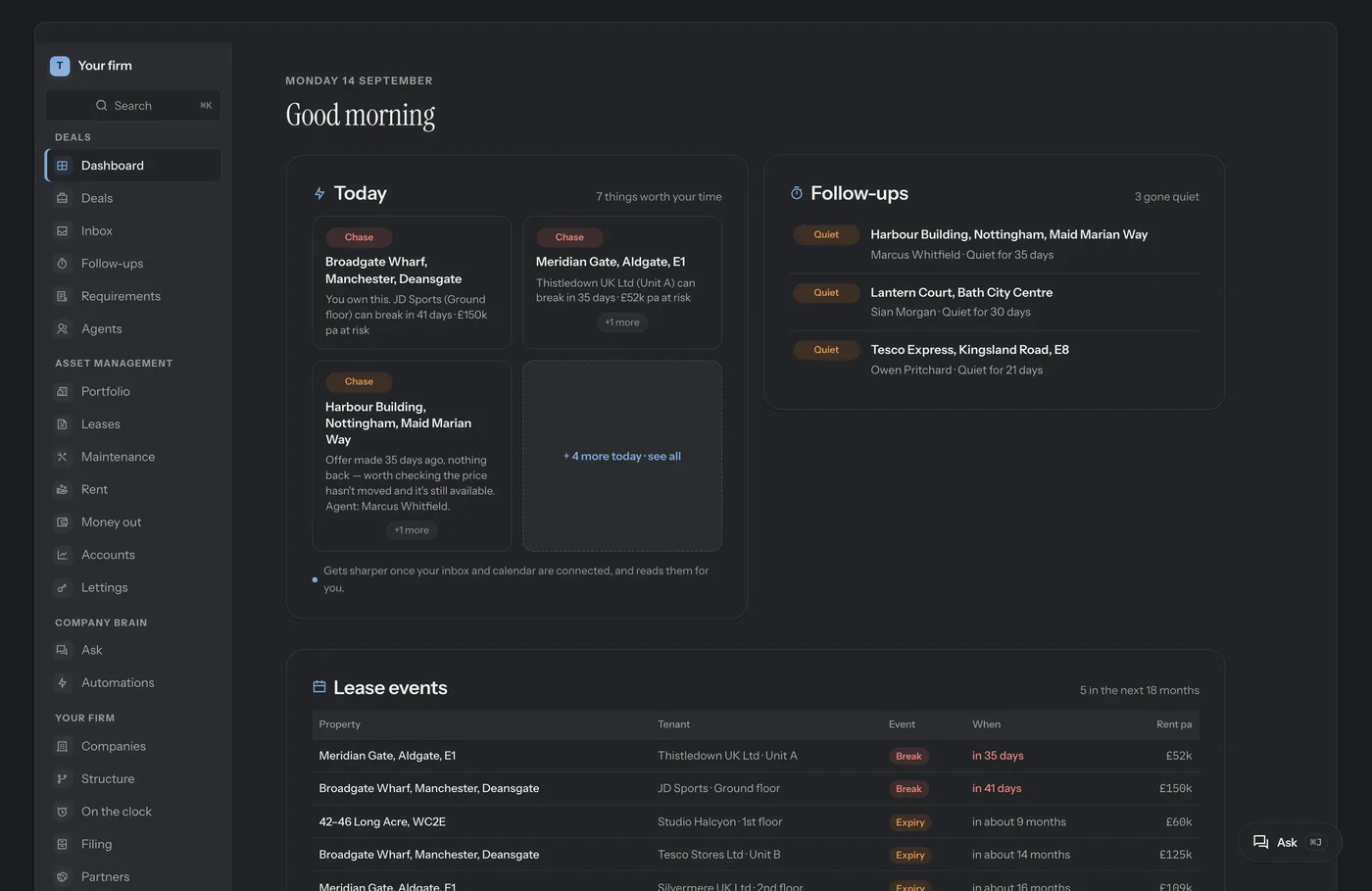
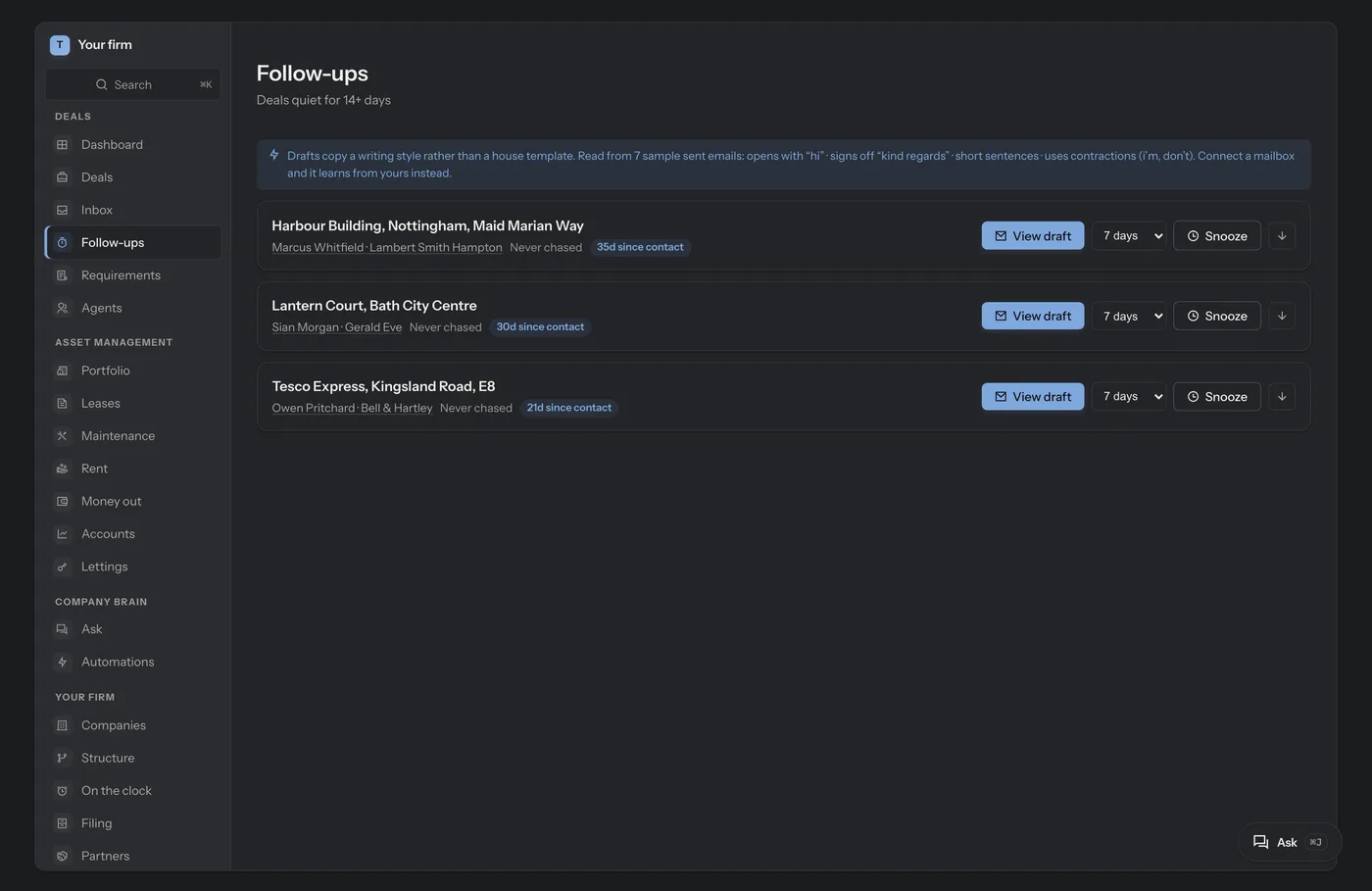
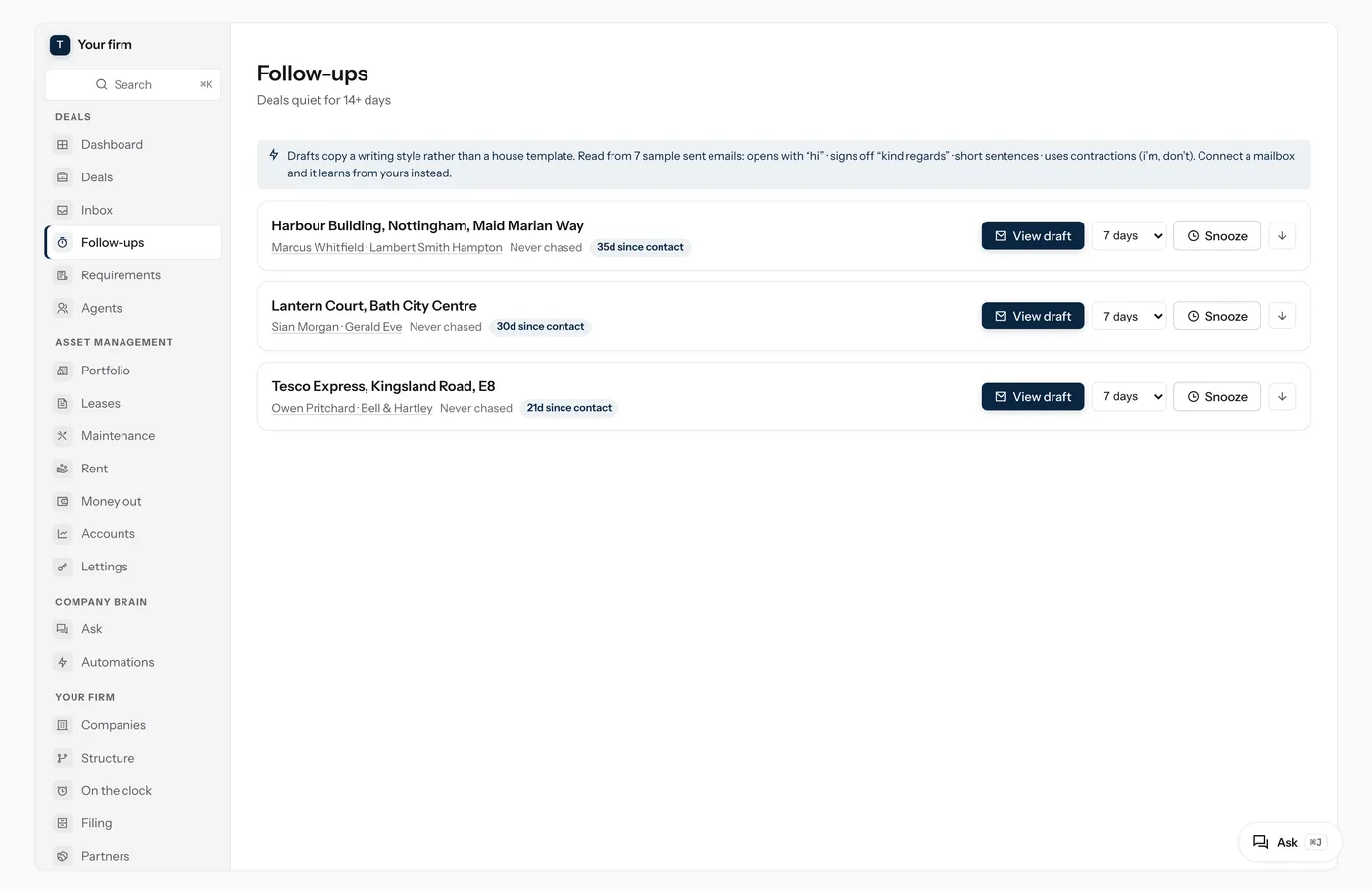
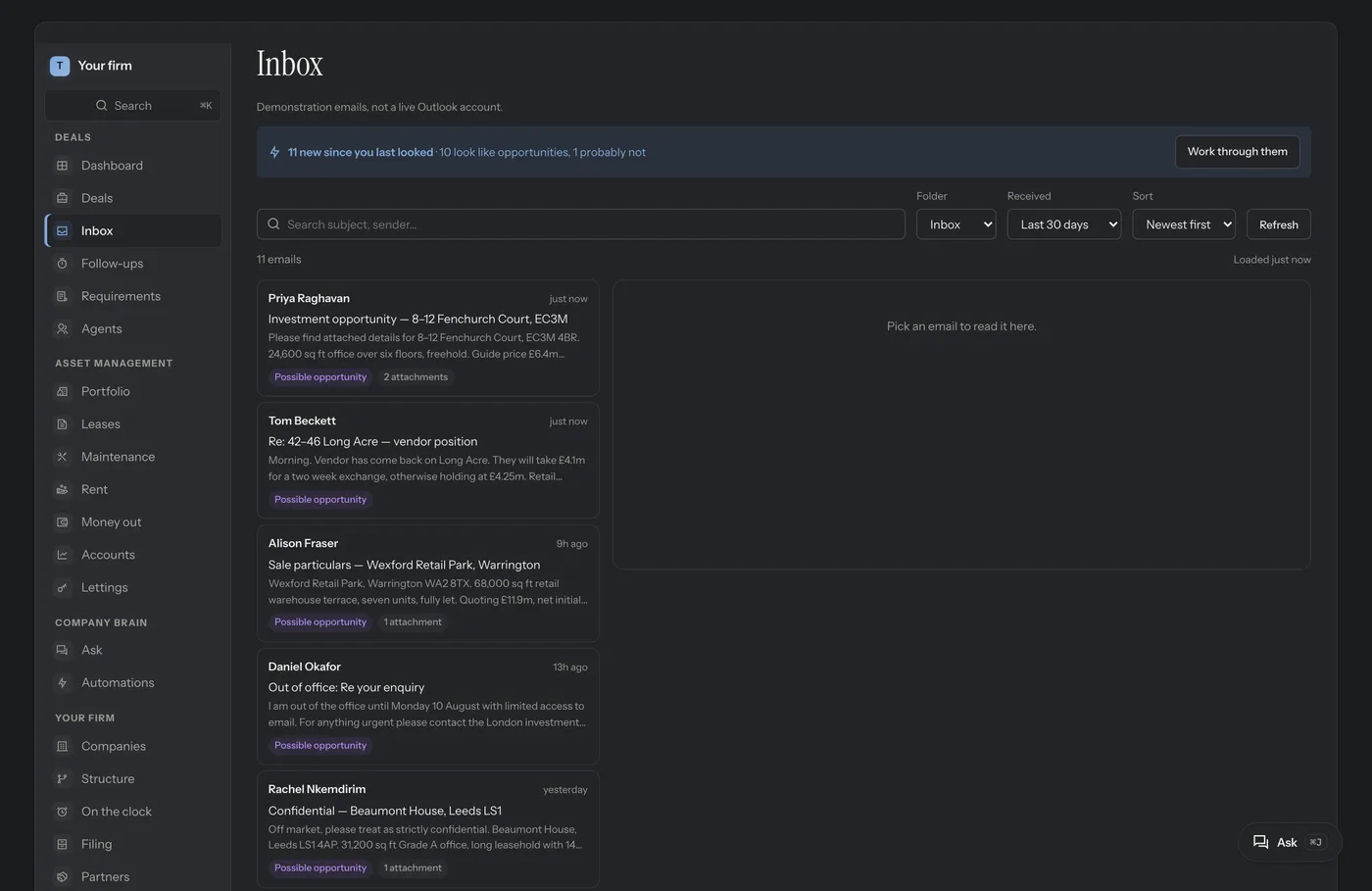
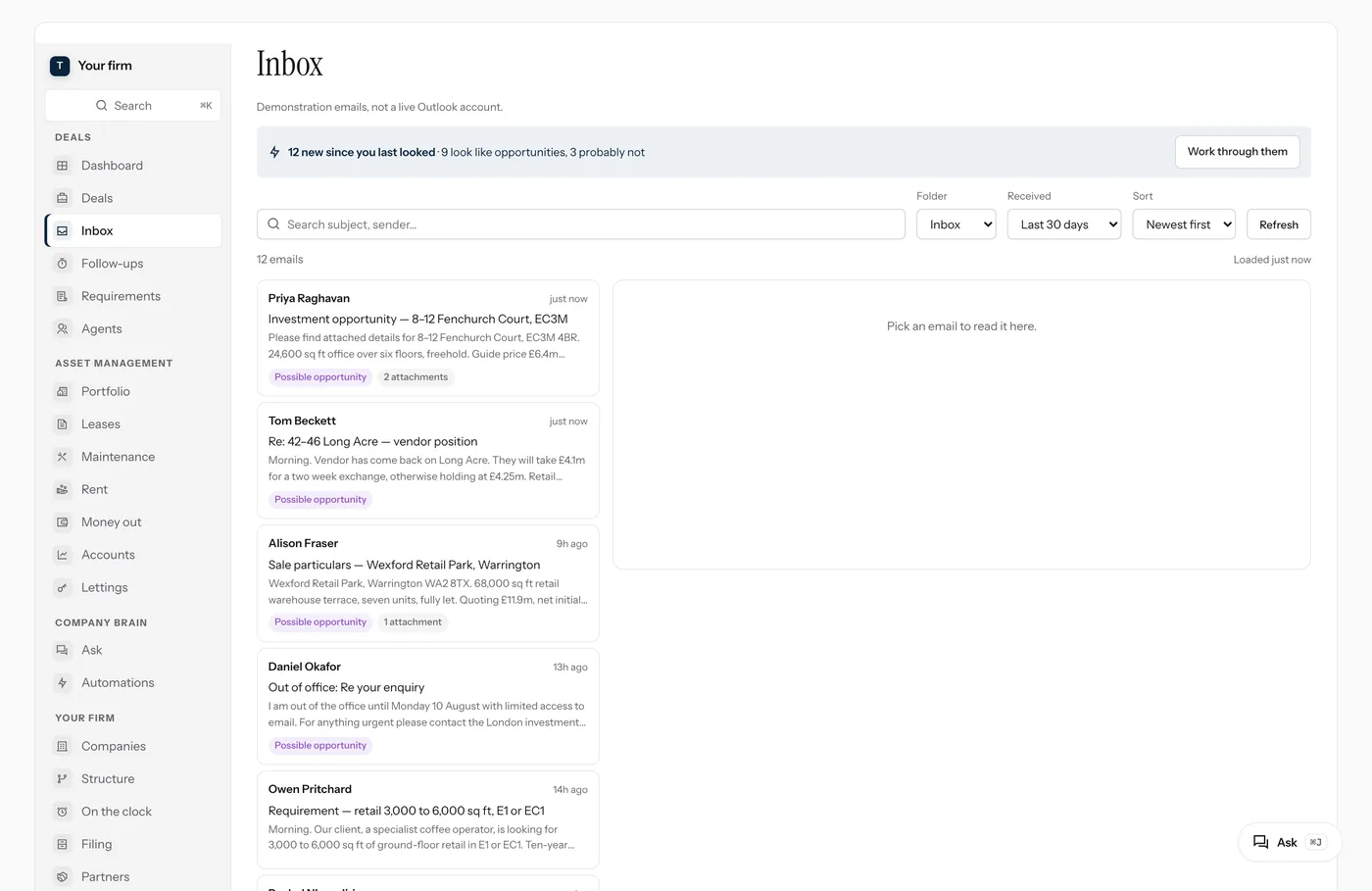
Swipe across any screen on this page to read it.
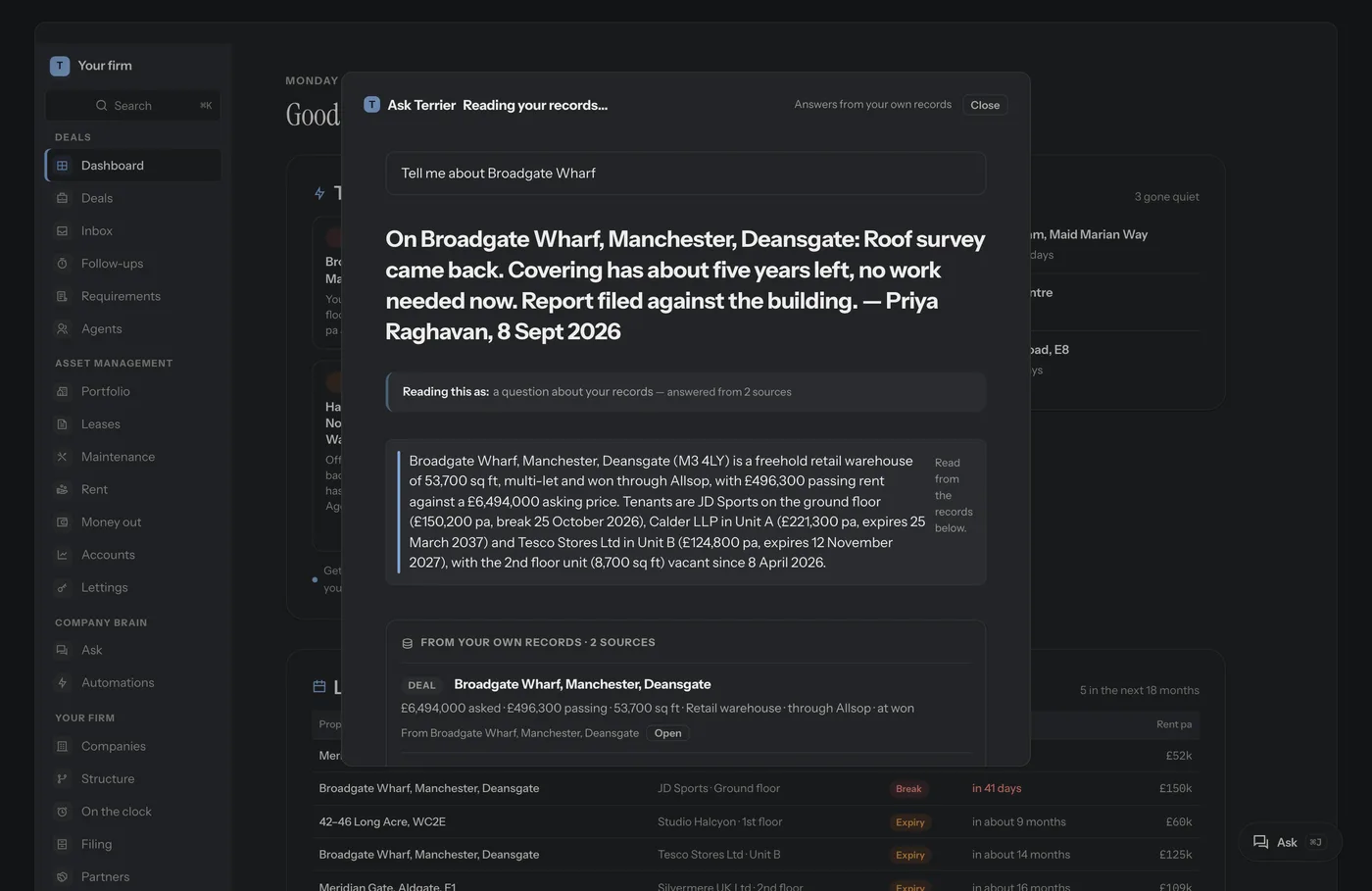
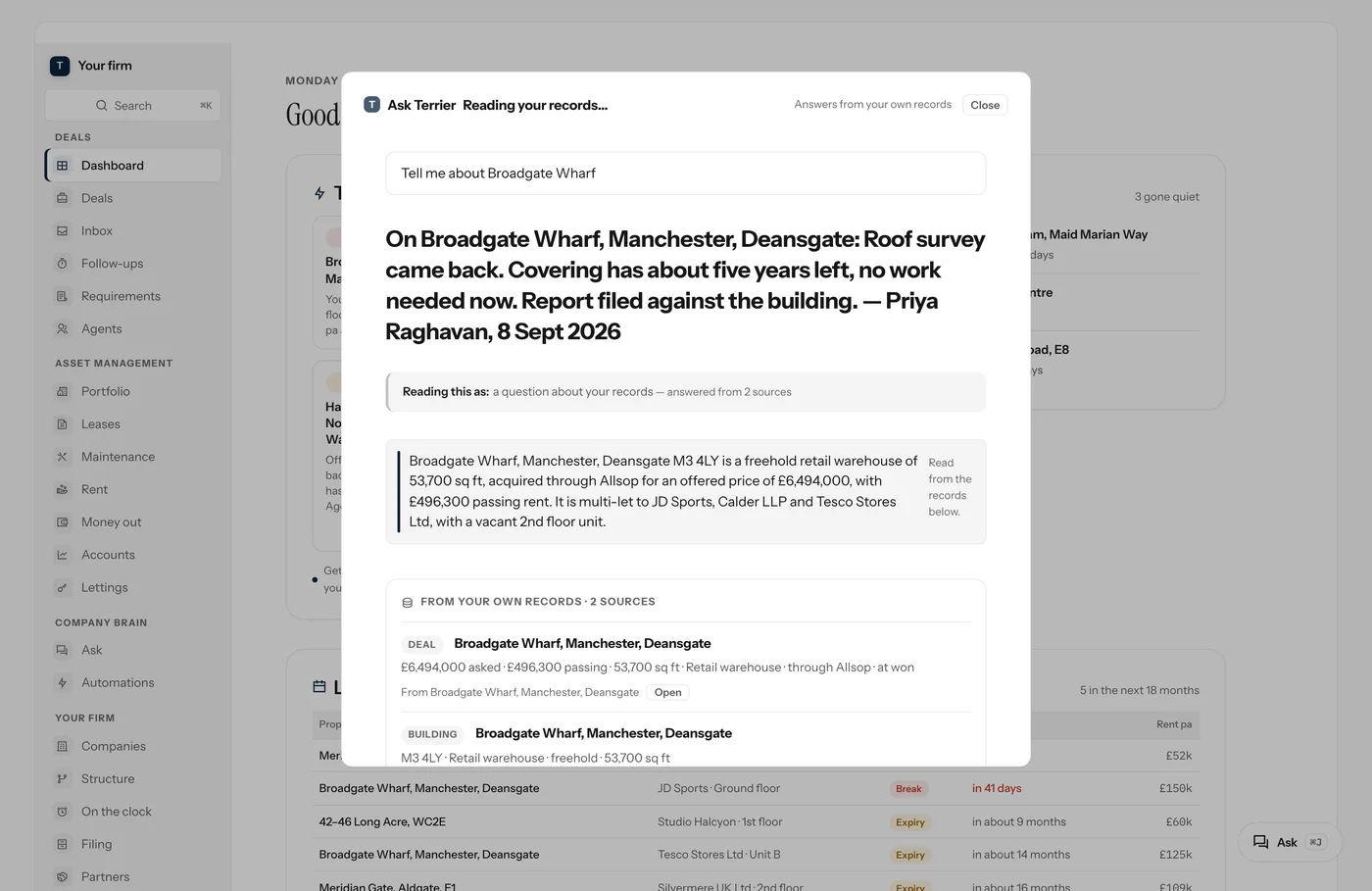
It quotes the lease.Every term carries the clause and the page it was read from.
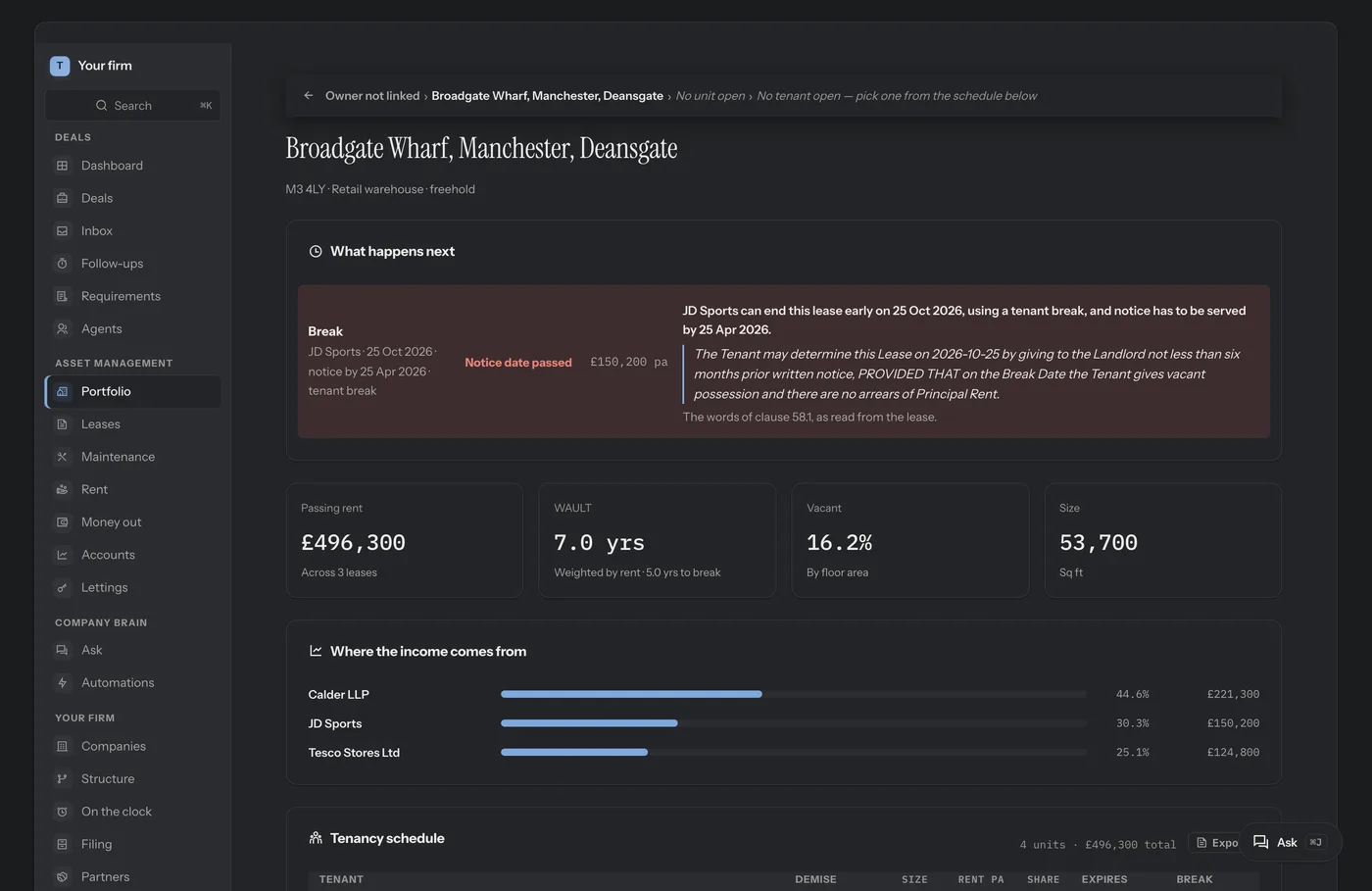
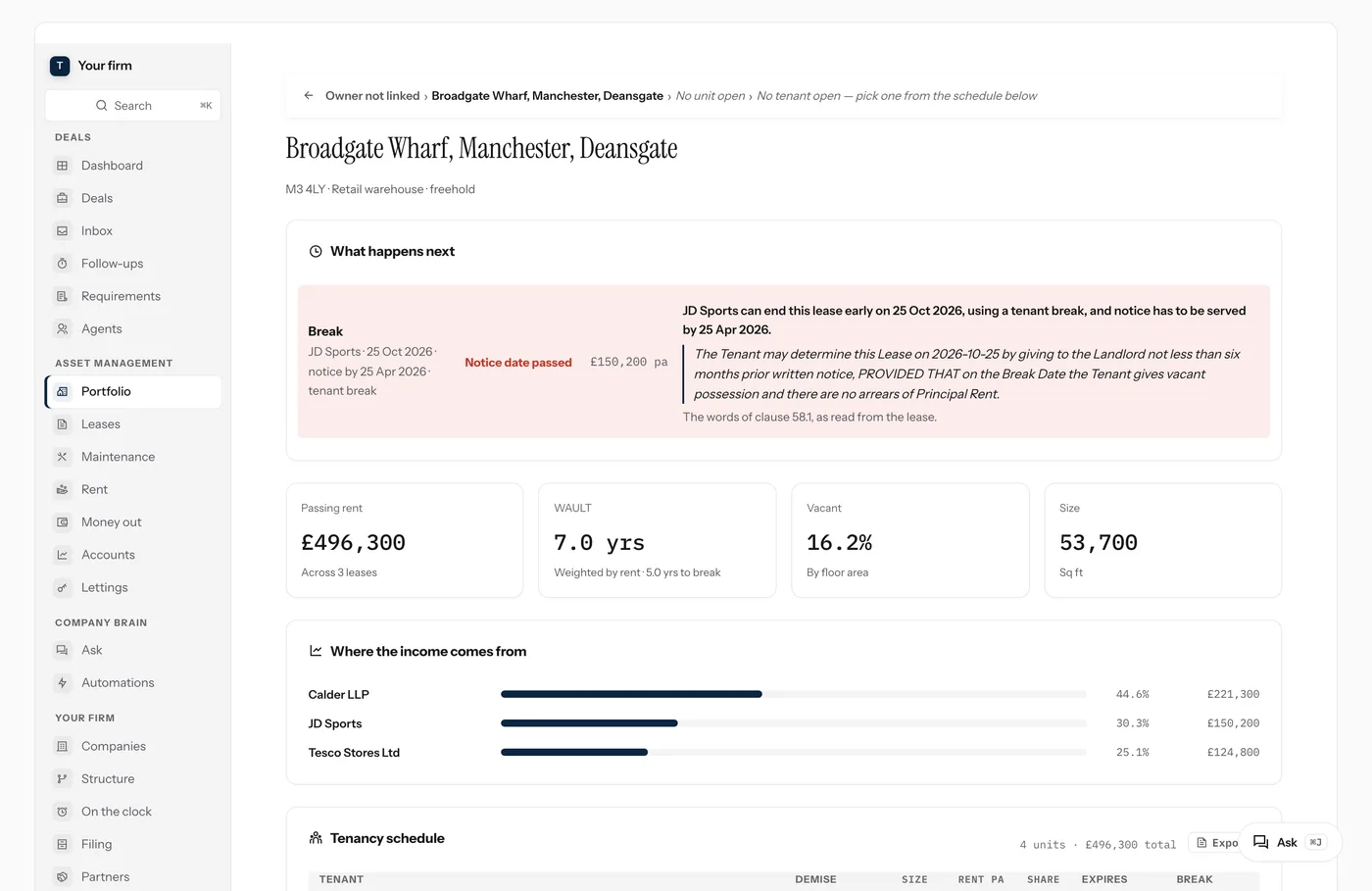
It works dates backwards.A break in September with six months' notice is a deadline in March.
It says when it does not know.A blank sends somebody to look. A confident guess does not.
Deals
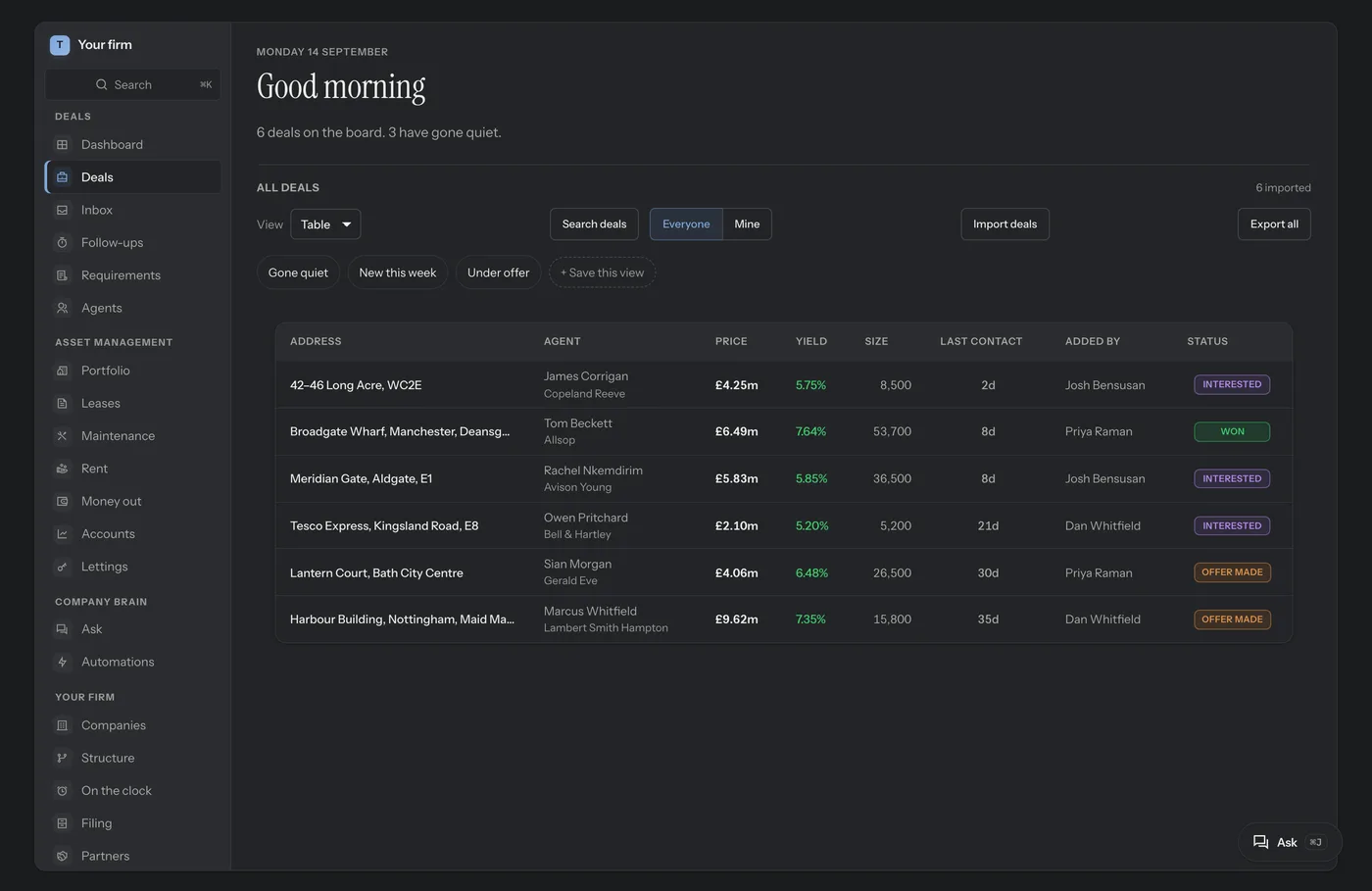
Every deal on one board. Then the one you are actually working on.
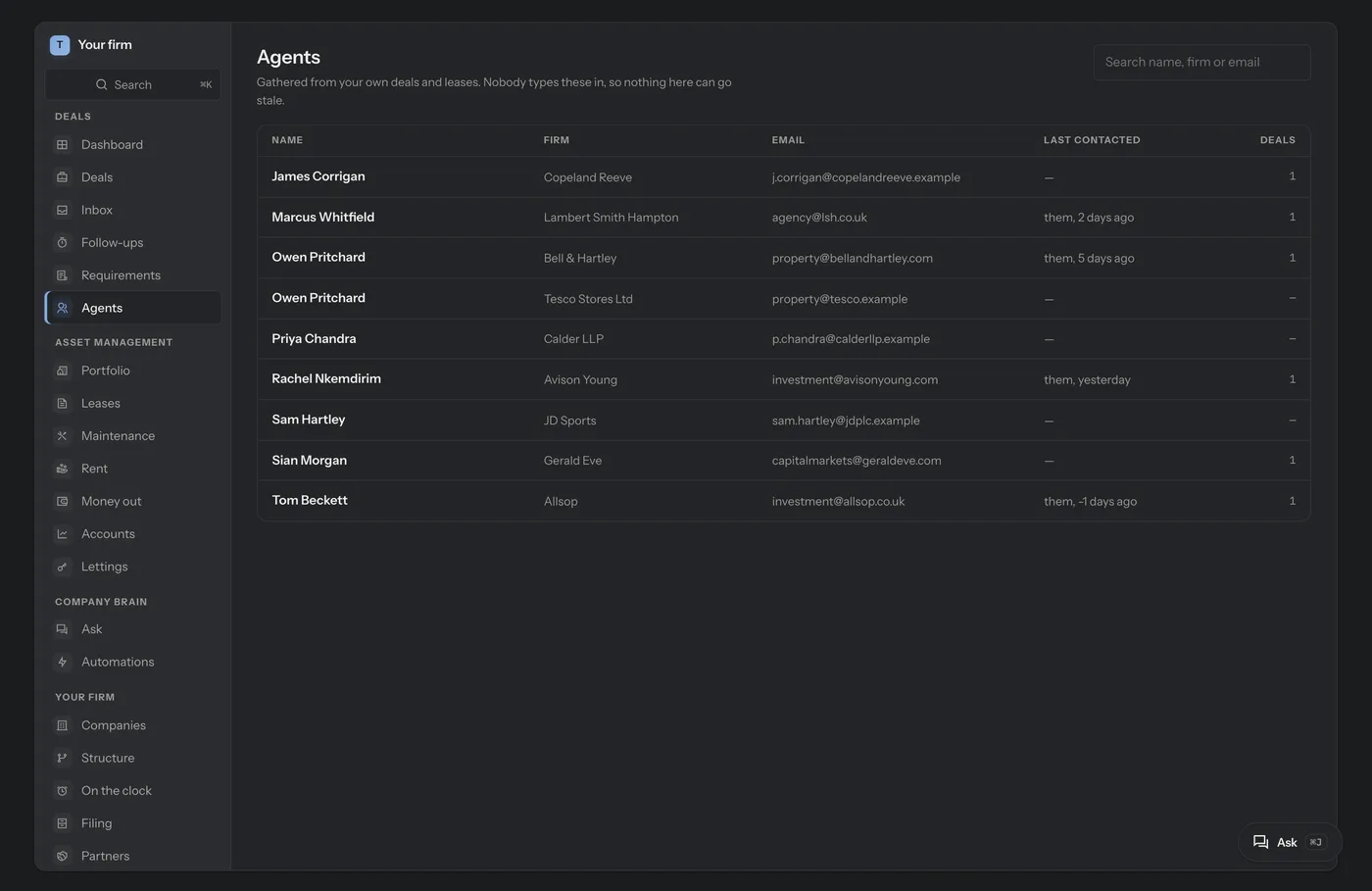
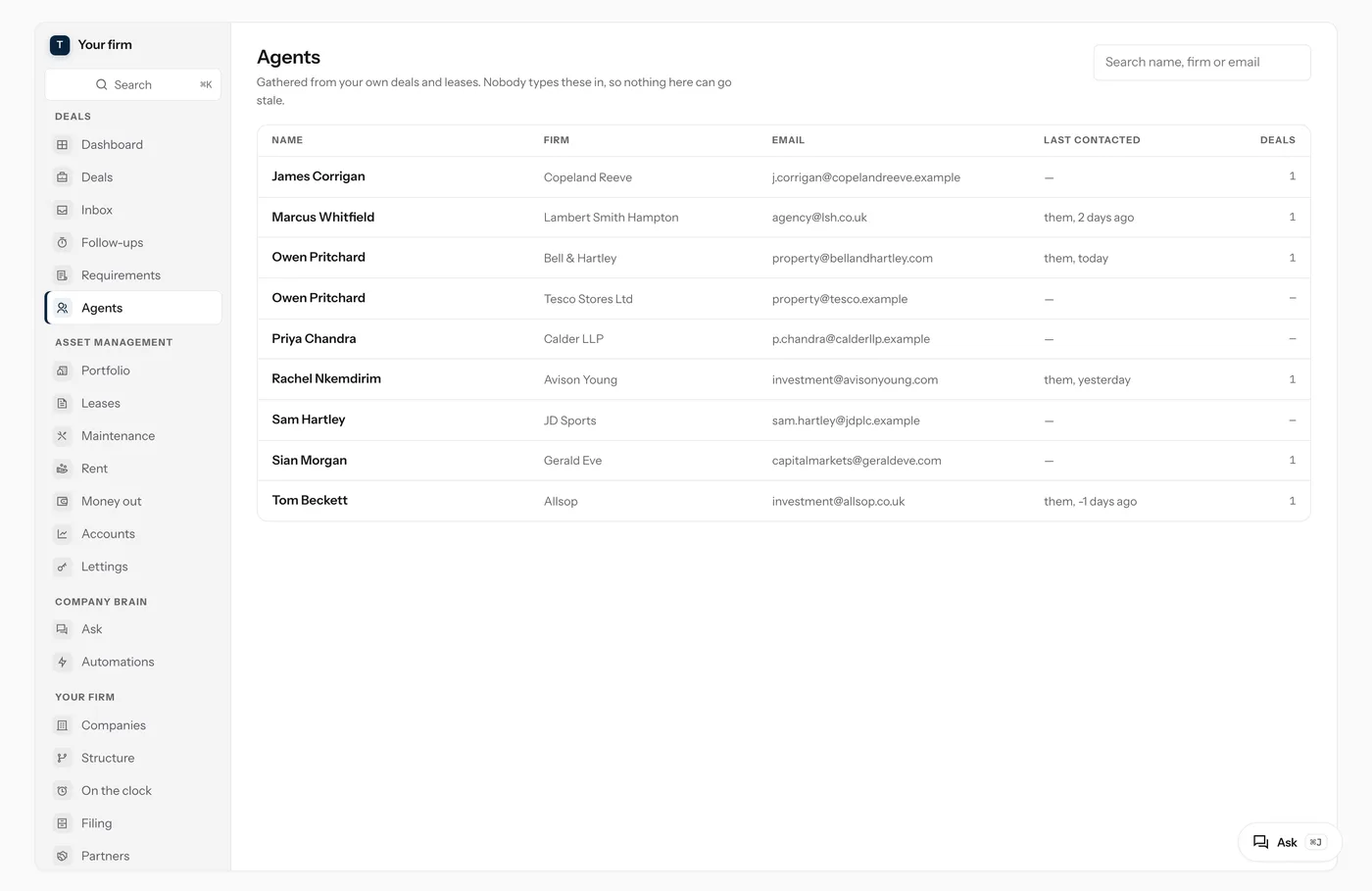
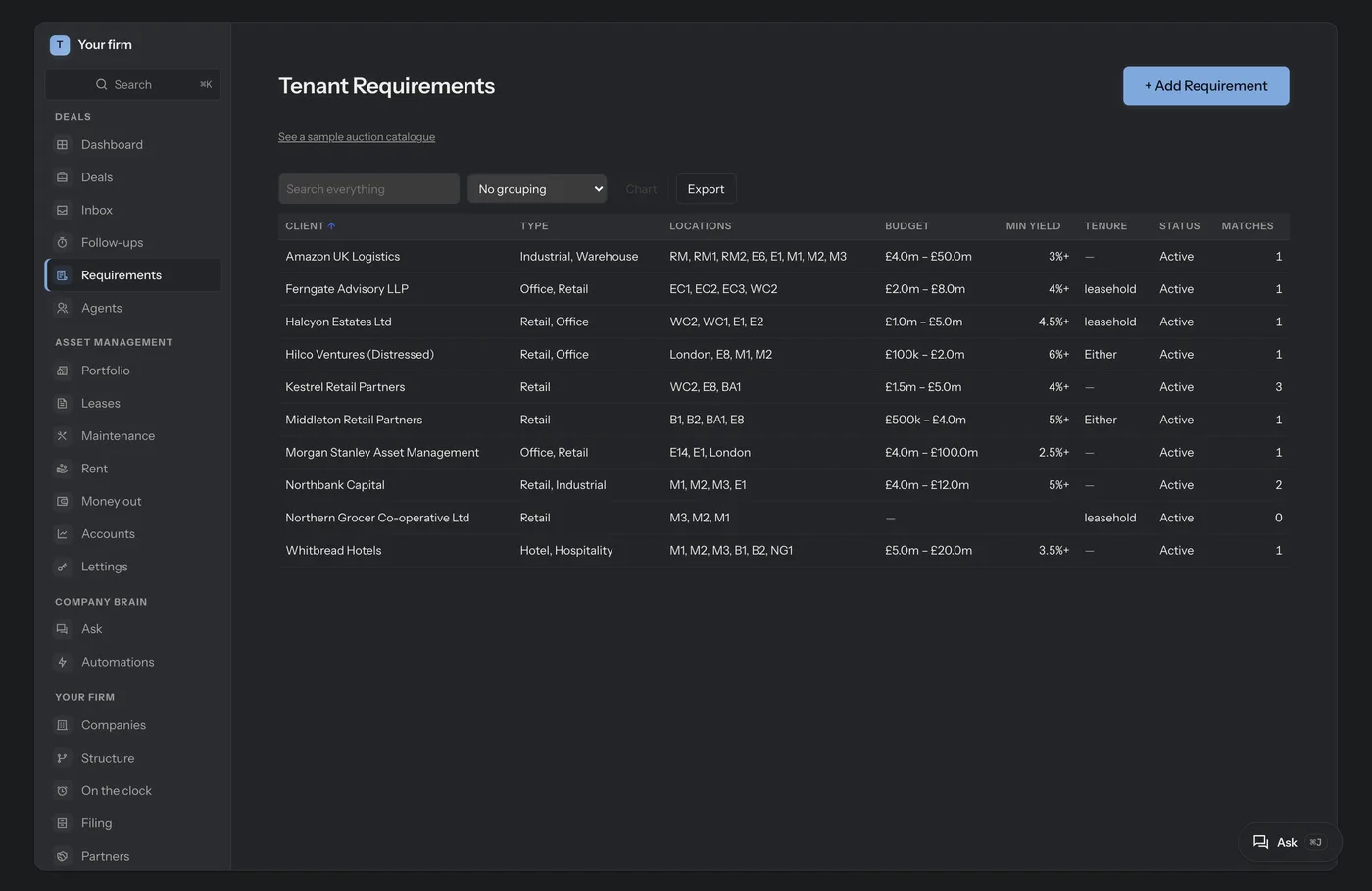
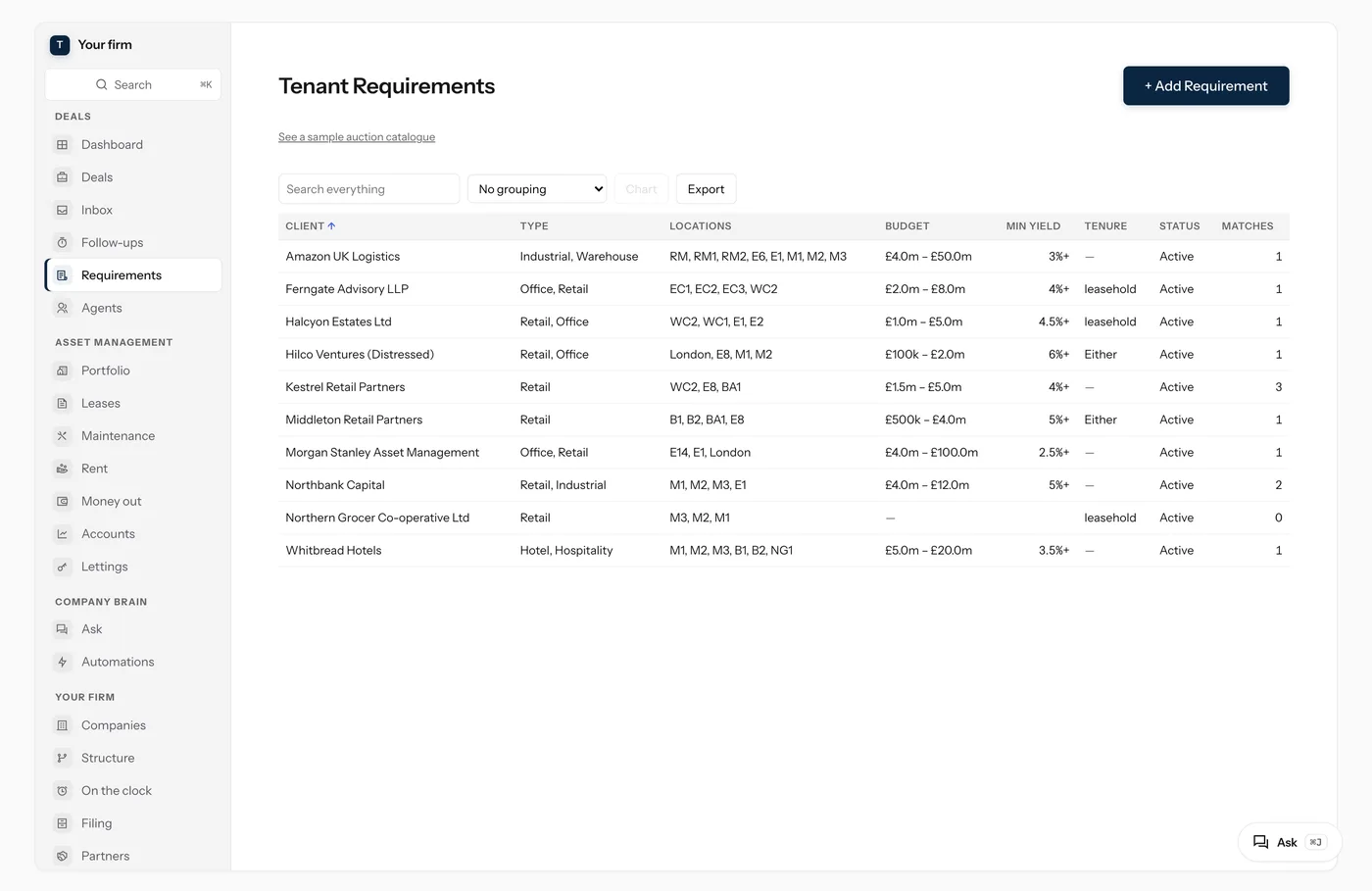
Price, yield, size, the agent who sent it and how long since anyone spoke to them.
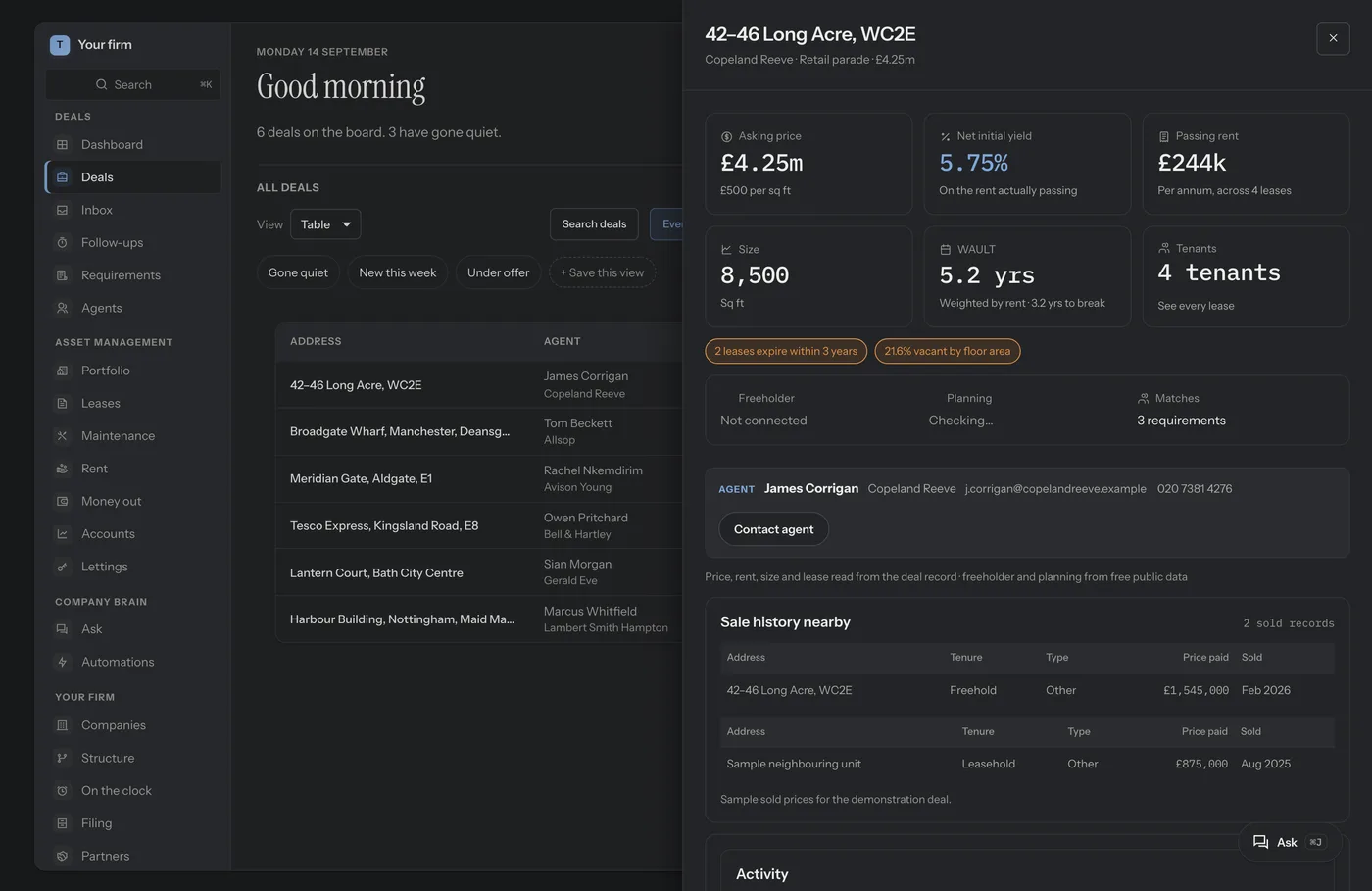
Sort it, filter it, edit it in the cell. Open one and the rest is there: the money, the leases,
the number to ring, and what has sold nearby.
Everyone's deals or only yours. Sorted, filtered, and edited in the cell.
One opened. Price, yield, term, the tenants, the agent to ring, and what has sold nearby.
What you are trying to do
Pick the thing that is on your mind.
Asset management
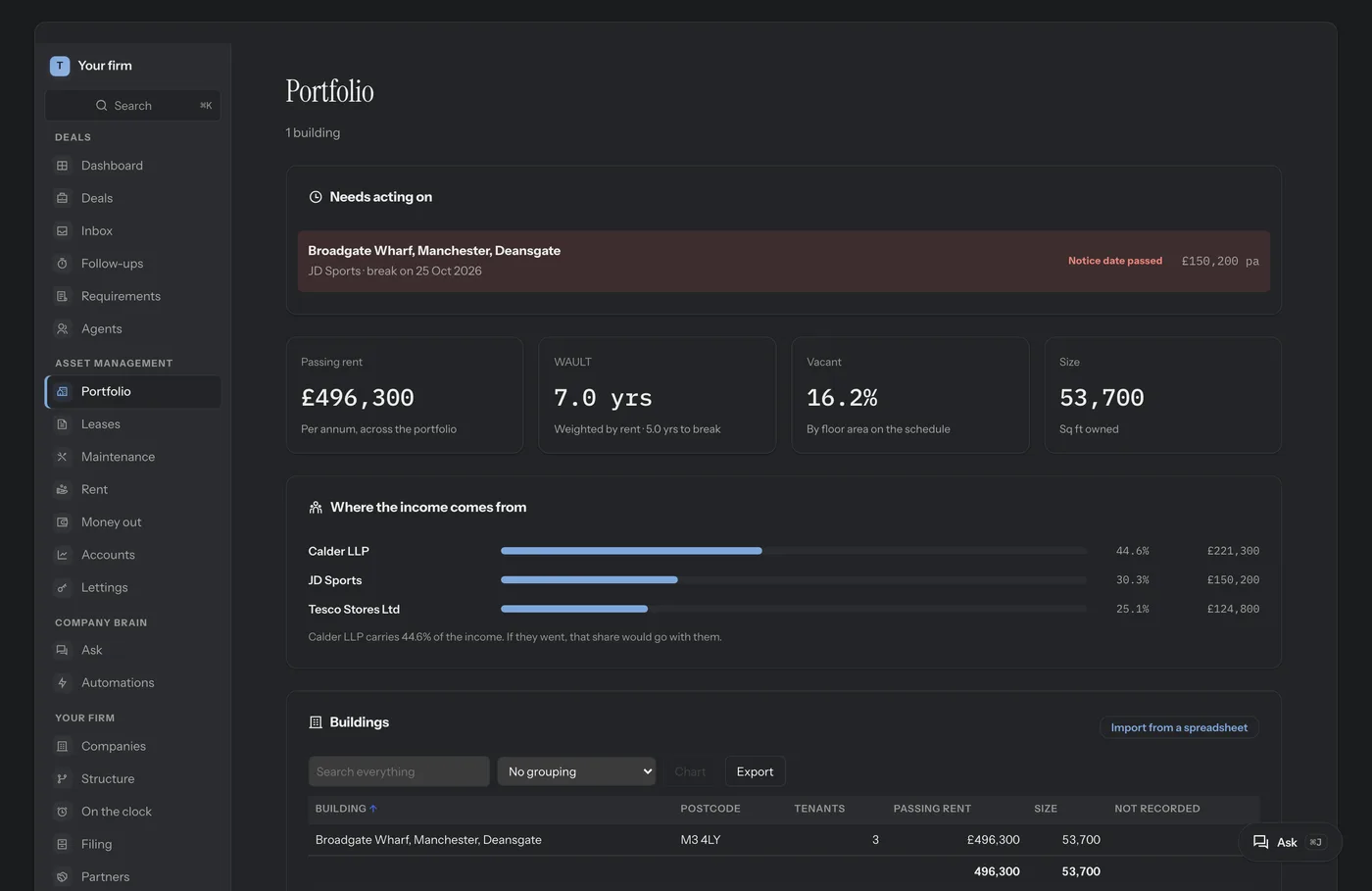
And the buildings you own, in one place.
What is let and to whom, what is passing, what is vacant, and what is about to happen.
Rent demanded on the English quarter days, arrears aged oldest first, interest worked out the way
the lease actually says. Turned on only if you want it.
Worth saying plainly
What it does not do.
Most software in this market will not tell you this part, so here it is first.
It is not an accounting system
It does not hold your client money and it does not file your VAT. It exports to the ledger you already keep.
It is not a marketing tool
It will not push your property to the portals. It is for the side of the desk where you decide what to buy and what to chase.
It is not a deal finder
Public data proves who owns a building. It never proves that anybody wants to sell one.
It is not a substitute for reading the lease
When the money is large enough to matter, read the clause. Terrier will show you exactly where it is.
Two things we built, finished, and then took out.
Covenant checking
What it actually read was a company's filing status at Companies House, which is not the same thing as
whether your tenant is good for the rent. A screen that implies otherwise is worse than no screen,
so it came out.
Deal finding
The free public data proves who owns a building. It cannot prove that anybody wants to sell one, so what
it produced was a call list, and selling that as deal finding would have been a lie.
Both are still in the code
Nothing was deleted. They go back in the day there is a source that earns the name, and not a day before.
See it on your own buildings.
Send us one lease and a list of your units. We will show you what Terrier makes of them
before you commit to anything.